Jewelry & placement — studio reel
Implant-grade jewelry and anatomical placement.
Watch on InstagramReviewed & maintained Reviewed by Katelyn Morgen Cole, Professional Piercer · Last updated: June 2026 Expert section label: Katelyn's Piercing Tips
Humidity below 10% is normal here. Your crusties tighten faster, pools are everywhere, and dust storms show up without warning. This guide is what I tell every client before they leave my chair.
Piercing encyclopedia · Tattoo desert aftercare · Piercing videos
Low humidity pulls moisture from healing skin. Crusties form a hard shell faster than at the coast — that is normal, not a crisis. Picking them micro-tears the fistula. Sterile saline mist softens crust; your fingers do not belong on the jewelry.
Hotel pools, day clubs, and vacation dips are tempting — wait until your piercer clears you. Bacteria in standing water is the leading cause of irritation bumps I see on tourists. Ear and navel piercings: minimum 4–6 weeks before submerging; cartilage often longer.
Hot water softens healing tissue and introduces bacteria. No hot tubs, steam rooms, or long baths until fully healed. A quick shower is fine — keep saline after if shampoo runs over the piercing.
Spring wind in the valley kicks up fine dust that irritates fresh nostril and conch work. Rinse with saline after outdoor festivals; change pillowcases if you come home dusty.
Never SPF on a fresh piercing — chemicals burn open tissue. Healed piercings still need protection; titanium jewelry can heat in direct sun. Hats and shade beat re-traumatizing a healing helix.
Sweat is salty — it dries into crust on cartilage posts. Rinse with saline after workouts; do not wipe with a gym towel on fresh work. Headbands and over-ear headphones add pressure — plan around them.
Ear curation and aftercare in the studio — Katelyn Cole, Las Vegas.
Real ear piercing work from our studio — not stock photos. Starter length, swelling room, downsizing, and healed angles documented in Vegas.

Placement and angle marked for your anatomy — implant-grade starter jewelry sized for swelling.

Fresh cartilage or lobe — implant-grade studs with extra post length for swelling.

Around 6–8 weeks swelling drops — this is when downsizing protects the angle and prevents bumps.

Downsize to a shorter post or swap ends once the fistula is stable — booked as a check-in, not a mall kiosk.
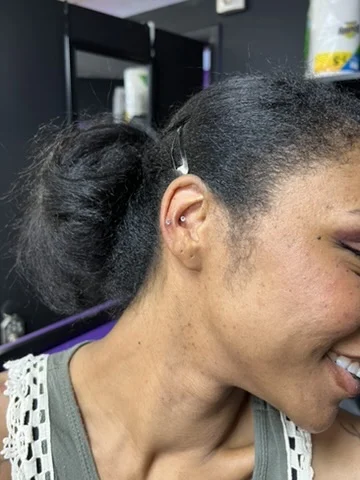
Flat and conch starters sit long on purpose — shortening too soon causes embedding and bumps.
Photos from Work of Art clients — angles and jewelry length vary by anatomy. Studio gallery · Katelyn's portfolio

Client wanted a balanced constellation without crowding the helix. We measured anatomy, picked implant-grade titanium, and staged piercings so swelling on one side did not complicate the other.